
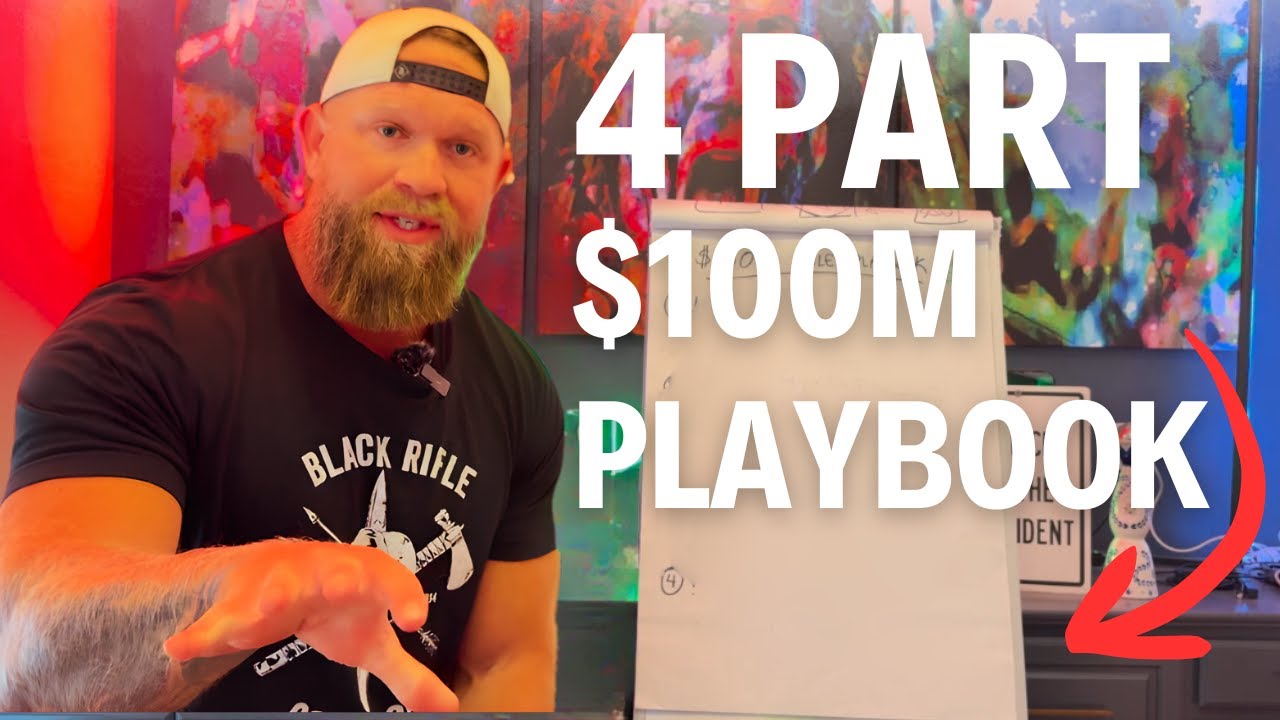
How to Improve Sales Team Performance: 4-Part Playbook
To improve sales team performance, fix the system before you touch headcount: tighten lead management so every new lead is called in under 2 minutes, build a RevOps dashboard that tracks contact rate through cash collected, score every sales call with AI, and run a weekly training cadence. At Sales Machine, this 4-part playbook has recovered over $1M in leaked revenue across 32+ B2B sales teams — without adding a single rep.
Key Takeaways
Most "underperforming" teams have a system problem, not a talent problem — revenue leaks hide in lead handling, data, QA, and training.
Speed to lead under 2 minutes is the single biggest lever — leads called within minutes book at dramatically higher rates than leads called hours later.
The average lead takes ~8 contact attempts before an appointment books — most teams stop at 3 and blame the leads.
AI call scoring makes 100% call review possible — a custom GPT with your scoring rubric can grade every call and post results to Slack.
A weekly L10 meeting plus a role-play "power hour" closes the loop — data tells you what's leaking, training fixes it.
By Taylor Robbins, Founder of Sales Machine — updated July 2026
Your sales team is probably leaking revenue right now. Not because your reps are lazy or your leads are bad — because the system around them has holes. Leads sit uncalled for hours. Nobody knows the real contact rate. Calls never get reviewed. Training happens "when we have time."
This article breaks down the exact 4-part playbook we've run with 32+ sales teams doing $2M–$40M a year. It's the same system from the video below, expanded with the numbers and implementation detail you need to run it in your own business this week.
Why sales teams leak revenue (and where to look)
A revenue leak is a point in your sales process where winnable deals die from neglect — not from losing to a competitor. The four most common leaks map directly to the four parts of this playbook: leads that never get contacted fast enough or often enough, KPIs nobody tracks, calls nobody reviews, and reps nobody trains consistently.
Here's the part most founders miss: you don't fix these leaks by hiring more reps or spending more on ads. In our experience running this playbook across 32+ teams, fixing the system first recovered at least $1M in combined revenue before anyone touched headcount or ad budget. More bodies in a leaky system just means leaking faster.
Source video: watch the full 17-minute breakdown on YouTube
Part 1: Lead management — speed to lead and priority queues
Speed to lead is the time between a lead entering your CRM and your team's first contact attempt. The target is under 2 minutes. Research published in Harvard Business Review found that companies contacting leads within an hour were nearly 7x more likely to qualify them than companies that waited even an hour longer — and most companies didn't respond for days. Two minutes beats an hour by the same logic: the prospect just clicked your ad. Pain awareness will never be higher.
Here's the structure we install:
Pipe every lead source into one queue. Meta ads, PPC, affiliates, cold outbound — everything lands in the CRM and flows to the dialer.
Sort by fewest contact attempts, then newest. A brand-new lead with zero attempts always sits at the top.
Fire a notification the second a lead arrives. We use Slack. Rep sees the ping, pauses whatever list they're working, and dials the new lead immediately.
Recycle uncontacted leads every 2–3 hours. One attempt, then the lead drops into a holding bank and re-enters the P1 queue 2–3 hours later.
Target 10+ contact attempts in the first 4–5 days. The average lead takes around 8 attempts before an appointment books. Most teams average 3 attempts and conclude "the leads are bad."
Prioritize the queue in three tiers:
PriorityWho's in itWhy it mattersP1New leads, zero attemptsBooking rate is highest in the first minutesP2No-showsFresh appointment that needs immediate rescue and a proper tie-downP3Reactivation — dormant leads 90+ days oldCheapest pipeline you'll ever generate; you already paid for these leads
One nuance on no-shows: when a rep reschedules a no-show, they should re-run light discovery — a couple of problem-awareness questions. A booked call is a transaction of time. If a founder or CEO is saying yes to 30 minutes, they need to be re-sold on why that 30 minutes solves a problem they actually have.
Want this system built and run for you?
Sales Machine installs this exact lead management engine — plus the human setters who work it — for B2B companies with existing sales teams. No SDR hiring, no training, no churn. Get top-performing setters →
Part 2: Data — build a RevOps dashboard that predicts revenue
You can't fix a leak you can't see. A RevOps dashboard is a single master view of your sales KPIs — daily, week-to-date, month-to-date, and quarter-to-date. If you don't have one, that vague frustration of "something's off but I don't know what" is the symptom.
Track these metrics at minimum:
Dials and connections — raw activity, and your connection (pickup) rate
Contact rate — the percentage of leads you reach and disposition at all; a healthy team runs near 80%
Booking rate and lead efficiency — what percentage of leads become appointments
Show rate — appointments completed vs. booked
Close rate — shows that become customers
Contract value vs. cash collected — a $50K contract on a 24-month payment plan is not $50K today; track cash at point of sale separately
These numbers compound into your unit economics. If leads cost $10 and lead efficiency is 20%, your cost per booked call is $50. Contact rate and pickup rate are the leading indicators that move that number — which means the dashboard doesn't just report revenue, it predicts it. Salesforce's State of Sales research has found reps spend under a third of their time actually selling; the dashboard tells you whether that limited selling time is going to the right leads.
This connects directly to Part 1: the lead management data (attempts, speed to lead, recycling) feeds the dashboard, and the dashboard tells you whether lead management is actually happening.
Part 3: Quality control — score every call with AI
Sales call quality control is the pairing of quantitative data (is the rep hitting KPI?) with qualitative data (what's actually happening on their calls?). The dashboard tells you a rep's booking rate dropped. Only the recordings tell you why.
The old objection — "I can't listen to every call in my company" — is dead. Here's the AI review loop we set up for clients:
Every call transcript feeds into a custom GPT (we build these on OpenAI) loaded with your knowledge base: sales process, playbook, and scoring rubric.
The rubric scores each call on the behaviors that matter: frame control, discovery quality, problem identification, future pacing, presentation.
Each scored call posts an automatic report to a dedicated Slack channel — every set call and every closing call, graded, every day.
Any call scoring below 75% gets flagged for live review in training (more on that in Part 4).
This is 100% call coverage with zero manager hours spent listening to full recordings. The manager reads scores, spot-checks flagged calls, and walks into training with specifics instead of vibes. We covered more ways to apply AI to the back office of a sales org in our breakdown of how top teams use AI in sales.
Part 4: Training and management — the L10 and the power hour
Training is where the other three parts pay off. Without a fixed cadence, "coaching" becomes the thing that gets skipped every week. The structure we install has two standing meetings:
The weekly L10 (90 minutes). Borrowed from EOS — the Entrepreneurial Operating System popularized by Gino Wickman's Traction. The sales version covers a pulse check on each rep (mental state, conviction in the offer, read on team culture), pipeline management against KPIs, and an open issues list: CRM hygiene, data tracking gaps, script problems, company-wide initiatives. Most real problems surface here — if you let them.
The weekly power hour (60 minutes). Pure skill work: role-playing and call review. Every call that scored below 75% in the AI QA loop is a candidate for team review. The whole team watches, not just the rep who missed — because the goal is pattern-proofing the team, not embarrassing one person. Drill the script, the tonality, the questions that got skipped.
That's the flywheel: dashboard flags the leak → AI scoring diagnoses it → power hour fixes it → next week's dashboard confirms it. Transparency plus accountability, on a schedule. If you suspect deeper structural problems, run a full diagnostic first — we published the exact process in our sales team audit guide.
How to improve sales team performance this week
You don't need a quarter-long transformation project. The playbook installs in roughly this order:
Days 1–2: Set up lead routing — fewest-attempts-first sorting, Slack new-lead alerts, 2–3 hour recycling. Define P1/P2/P3.
Days 3–4: Stand up the dashboard. Even a spreadsheet works to start: dials, connections, contact rate, booking rate, show rate, close rate, cash collected.
Week 2: Build the AI call scoring loop — custom GPT, scoring rubric, Slack reporting channel.
Week 2 onward: Put the L10 and power hour on the calendar as non-negotiables.
Notice what's not on the list: hiring, firing, or more ad spend. Fix the system first. Then every rep you add and every dollar of ad spend performs better, because it lands in a machine instead of a leaky bucket. Managers making structural mistakes on top of a leaky system compound the damage — we broke down the big three in the most common sales management mistakes.
Frequently Asked Questions
How do you improve sales team performance?
Fix the system before the people. Install lead management with sub-2-minute speed to lead and 10+ contact attempts over the first 4–5 days, track KPIs on a RevOps dashboard, score every call with an AI rubric, and run a weekly L10 meeting plus a role-play power hour. Across 32+ teams, this playbook recovered $1M+ in leaked revenue without adding headcount.
What is speed to lead and why does it matter?
Speed to lead is the time between a lead entering your CRM and the first contact attempt. The target is under 2 minutes. A Harvard Business Review–published study found companies contacting leads within an hour were nearly 7x more likely to qualify them than slower responders — and booking rates climb the closer you get to the moment the lead converted.
How many times should you contact a lead before giving up?
Plan for at least 10 contact attempts in the first 4–5 days — roughly 2–3 attempts per day. The average lead requires around 8 attempts before an appointment gets booked. Teams that average 3 attempts and stop are usually sitting on winnable pipeline they already paid to generate.
What KPIs should a sales team track?
At minimum: dials, connections, contact rate, booking rate, lead efficiency, show rate, close rate, average cash at point of sale, and contract value per new customer. Track each daily, week-to-date, and month-to-date. Contact rate and pickup rate are leading indicators — they predict appointment volume before revenue moves.
How do you do sales call quality control with AI?
Feed every call transcript into a custom GPT loaded with your sales process and a scoring rubric — frame, discovery, problem identification, future pacing, presentation. Each call gets a score and an automatic report posted to Slack. Calls under a threshold (we use 75%) get flagged for live team review in weekly training.
What is an L10 meeting in sales?
An L10 (Level 10) meeting is a weekly 90-minute leadership meeting from the EOS framework, adapted here for sales teams. It covers a personal pulse check on each rep, pipeline and KPI review, and a structured issues list — lead management problems, data gaps, script issues. It's the standing forum where leaks get surfaced and assigned.
Ready to fix the leaks instead of buying more leads?
Sales Machine is a done-for-you B2B appointment setting agency. We install this exact playbook — lead management, dashboards, AI call QA — and staff it with top-performing human setters, for B2B companies doing $3M+ with an existing closing team. This system has recovered $1M+ in revenue across 32+ sales teams.
No pitch. We'll diagnose your pipeline live and tell you exactly where it's leaking — whether you work with us or not.
About the author: Taylor Robbins is the founder of Sales Machine, a done-for-you B2B appointment setting agency that combines human setters with AI systems and data infrastructure to book qualified meetings for B2B companies. Sales Machine has run this playbook with 32+ sales teams doing $2M–$40M a year.

