
Modern Sales Techniques: 6 Shifts Failing Teams Miss
By Taylor Robbins, Founder of Sales Machine — updated October 2026
Modern sales techniques are the methods reps use to win buyers who research everything before they ever book a call. They replace rapport-building, closing pressure, and scripted objection handling with curiosity, genuine care, controlled uncertainty, and questions that make the prospect persuade themselves. According to Gartner's March 2026 survey of 646 B2B buyers, 67% now prefer a rep-free buying experience.
Key Takeaways
Trust comes from curiosity, not rapport: asking why the prospect booked the call beats ten minutes of small talk.
Care outsells closing: reps who want to solve the problem ask better questions than reps who want the commission.
Certainty is a curve, not a setting: create doubt about the current solution, then build confidence in the new one.
Sell the offer they built, not the one you have: pitch back their own words, criteria, and outcome.
Replace guarantees and word tracks with questions: "Would you be in a better position?" and "How would you solve this?" do the persuading for you.
Why do sales teams fail in the new economy?
Sales teams fail today because they are still running a playbook built for buyers who needed a rep to learn anything. That buyer is gone. Yours has already read your reviews, asked an AI tool about your category, and shown up skeptical.
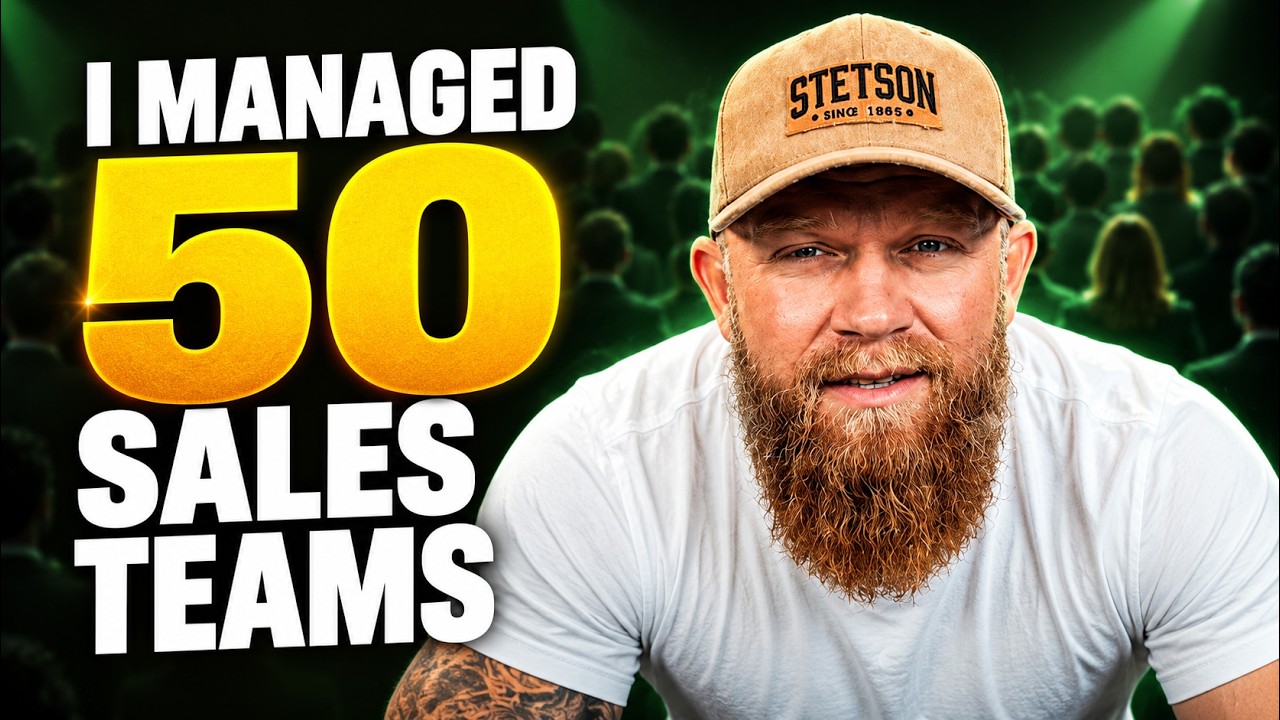
I've managed more than 50 sales teams across a dozen niches, taken 15,000 sales calls myself, overseen another 100,000, and hired 250+ reps. When a team stalls, the first instinct is always the same: better objection handling, better tonality, better questions. Sometimes that's true. Far more often, the real problem is upstream. The team holds the wrong core beliefs about what selling is.
The data backs up the shift. Gartner's 2025 survey of 632 B2B buyers found that 61% prefer a rep-free buying experience, and 73% actively avoid suppliers who send irrelevant outreach (Gartner, June 2025). The 2026 follow-up put the rep-free number at 67% and found that 45% of buyers used AI during a recent purchase (Gartner, March 2026).
Buyers don't dislike salespeople. They dislike being run through a process.
Here are the six shifts, in the order I see them break teams.
Source video: watch the full breakdown on YouTube
Is building rapport still important in sales?
Rapport-building as a tactic backfires, because buyers recognize it as a tactic. Trust comes from curiosity about their situation, not from small talk about their hometown.
Think about the last time you booked a call to solve a real problem. If the first ten minutes were chitchat, you knew the rep was warming you up for a process. That creates resistance and distrust.
Trust through curiosity means opening with the reason they showed up. They booked the appointment. Ask them: "What caught your attention enough to want to chat with me today?" Then keep digging into their current situation. Good questions build trust faster than any shared interest.
The second half of the trust problem happens before the call. Your buyer has access to every review and every opinion about your brand, and AI makes that research instant. You get ahead of that distrust with pre-call assets: a video sales letter (VSL), social proof, and reviews delivered before the first conversation. If the credibility of your business isn't settled up top, your rep is fighting uphill from minute one.
Should salespeople focus on closing or caring?
Salespeople should focus on caring, because closing pressure leaks into every question they ask. Prospects feel the energy behind a question whether the rep intends it or not.
Many reps carry a quiet discomfort: "I don't want to be salesy, I want to help." That instinct is right, but any negative undertone about selling shows up in how you engage.
The fix is a hard reframe: if you do a bad job on this call, the prospect walks away without the right solution. Sell fitness, and they stay overweight, unhealthy, and unhappy with how they look and feel. Sell insurance, and they leave still worrying what happens to their family if something goes wrong.
Once a rep genuinely cares, curiosity stops being a technique. They ask sharper questions because they want to find the problem and solve it. Care is the engine that makes the first shift work.
Want this done for you instead of figuring it out yourself?
Sales Machine builds and runs done-for-you B2B appointment setting with top-performing setters, so your closers spend their day on qualified calls instead of chasing pipeline. Get top-performing setters →
How do you build certainty without sounding overconfident?
You build certainty on a curve: create doubt where the prospect's current approach is failing, then build confidence where your solution fixes it. Constant confidence misses half the job.
Coaches love to say you're "transferring belief," so a confident rep makes a confident buyer. That's true, but only to a degree. The teams I see perform best create uncertainty in the moments where uncertainty belongs.
Say you run a marketing agency selling higher-quality leads. When the prospect describes their current lead system and how poor the leads are, your tone should match the problem. Many reps default to "Awesome" or "Solid, that's great" after every answer. Said to someone who just told you their leads are garbage, that sounds strange. They should feel bad about the results their current solution produces, because those results are bad.
Then the direction flips. When you move to your solution, your questions should help them feel more certain about the new outcome: "If you had this in place, how would that change your close rate?"
This is the Certainty Curve: doubt about the status quo, confidence in the new path. The table below shows how the two phases differ.
Phase of the call | Goal | Rep tone | Example question |
|---|---|---|---|
Current situation | Lower confidence in the status quo | Matched to the problem, no cheerful "awesome" | "How are those leads performing for your closers right now?" |
Gap and impact | Make the cost of staying put real | Calm, specific | "What does that cost you per month?" |
Desired outcome | Build confidence in the new path | Warmer, forward-looking | "If this worked, what would that look like?" |
Pitch | Confirm certainty | Direct, brief | "Does this get you closer to that outcome?" |
Why should you pitch the offer your prospect built?
You should pitch the offer your prospect built because buyers say yes to what they described, not to what you happen to sell. Your job is to make them design the solution first, then hand it back.
Buying signals are a trap. A prospect asks about price or timing, a manager yells "go for the close," and the rep jumps into the pitch. The prospect wanted French fries, you served hash browns, and you wonder why they hesitate. They never said which one they wanted.
So do the pre-work. Ask: "Let's say we got you the exact lead you were looking for. What would that look like? Walk me through what it needs to look like and sound like." Then keep pulling. "Tell me more about that." "Can you unpack that?" "Give me an example."
By the time you pitch, you can say: "You told me you want qualified leads from this area. Here's how we deliver exactly that." You're serving the thing they ordered, in their words and by their criteria. That is far easier than fitting your standard offer into what they're really looking for.
This is the Pitch-Back Method.
Do guarantees help close sales?
Guarantees rarely close sales, because a guarantee only works if the prospect believes it. If they doubt the outcome, the guarantee just gives them one more thing to think about.
Reps lean on guarantees as a crutch. "We guarantee it" is easy to say, and it sounds too good to be true. You can even put it in the contract, and the prospect still suspects the result won't happen. That's an uphill battle.
Swap the guarantee for a better-position question. You're not asking them to believe in a guaranteed result. You're asking them to agree they'd end up in a better spot than today. That's far easier to accept, and the point is to get them to persuade themselves.
Here's how it sounds with a prospect who doubts they'll lose 25 pounds:
"I totally get it. You've tried a lot of ways. If you cleaned up your diet with a plan that still lets you eat foods you like, started training with more intention, and had accountability for the days motivation drops, would you at least be in better shape than you are today?"
They say yes. You ask, "Why do you feel that way?" Now they're verbalizing the evidence. That conversation is much easier than "If you do these things, doesn't it make sense you'd lose 25 pounds?" — a question that invites "I don't have a crystal ball."
You can still include a guarantee in the offer. Just don't make it the persuasion.
How do you handle objections without a script?
You handle objections by asking the prospect to solve them, not by firing a clever word track. A prospect who solves their own objection owns the answer.
Teams obsess over the perfect line to beat the money objection. It doesn't work, and teams that make objection handling their focus still struggle.
Take "it's a little out of budget." Assuming the prospect already bought into the outcome, remove the money concern for a moment: "Say budget wasn't an issue. Do you feel this gets you where you're trying to go?" They say yes. Ask why. Make them dig in and state the evidence.
Then turn the problem over to them: "To get to that position, what would you need to do on the finance side to make it happen?"
Or take "money's really tight." Reason through it together: "If you had better leads and closed more, money wouldn't be the issue. What would you need to do so you don't have this problem again?" They might say they have to close more business to afford better leads. Now you can point out the loop: you don't get in shape before joining the gym. The gym is what gets you in shape.
You aren't being slick. You're asking a motivated buyer to solve a problem they care about. It echoes the Challenger research in Harvard Business Review, which found that the best reps teach and tailor instead of just reacting to requests (HBR, "The End of Solution Sales").
What do modern sales techniques look like in practice?
In practice, modern sales techniques turn one sales call into a guided problem-solving session. Here's the full flow, with all six shifts in order:
Open with curiosity. Ask why they booked. Skip the rapport script.
Show up caring. Treat a bad call as a prospect leaving without a solution.
Lower confidence in the status quo. Match your tone to the problem they describe.
Have them build the offer. Collect the details in their words.
Raise confidence in the new path. Ask questions that make the outcome feel real.
Use better-position questions and let them solve their own objections.
At Sales Machine, we've booked more than 67,000 qualified sales calls in five years for B2B clients, and the calls that close best are the ones where the prospect did most of the talking. The patterns in this article come from 50+ teams doing $2M to $40M a year.
If you want to see where your own calls break down, start with a simple audit. Pull ten recent recordings and check whether your rep (1) opened with curiosity, (2) asked the prospect to define the outcome, and (3) let the prospect solve the objection. Our guide on how to audit your sales team walks through the full process, and our breakdown of common sales management mistakes covers the manager-level fixes.
For teams that would rather not train a whole new setter bench, our B2B appointment setting service handles the top of the funnel. You can also see real client results before you decide.
Frequently Asked Questions
What are modern sales techniques?
Modern sales techniques are selling methods built for buyers who research before they talk to a rep. They use curiosity instead of rapport, care instead of closing pressure, questions instead of word tracks, and the prospect's own words instead of a standard pitch. The goal is to let the buyer persuade themselves.
Why are sales teams failing today?
Most sales teams fail because their core beliefs are outdated, not because their scripts are weak. They build rapport as a tactic, chase the close, stay confident the whole call, pitch their own offer, lean on guarantees, and memorize rebuttals. Buyers see through all six, especially with AI research tools available.
Is building rapport still important in sales?
Rapport matters less than curiosity. Extended small talk reads as a tactic and creates resistance and distrust. Open instead with why the prospect booked the call, then ask about their situation. Trust follows from good questions, and pre-call assets like a video sales letter and reviews address skepticism before the conversation starts.
How do you handle objections without a script?
Ask the prospect to solve the objection themselves. First confirm they want the outcome, remove the objection hypothetically, and ask why they want it. Then ask how they would overcome the obstacle, such as budget. When a buyer who wants the result describes their own solution, you don't need a rebuttal.
Should sales reps use guarantees to close deals?
Guarantees help only as part of the offer, not as the persuasion. A guarantee that sounds too good to be true triggers suspicion. Ask a better-position question instead: "Would this put you in a better spot than you're in today?" Prospects find it much easier to agree with that than to believe a guaranteed result.
Ready to fill your calendar with qualified calls?
Sales Machine has booked more than 67,000 qualified sales calls in five years for B2B companies, using AI, automation, and top-performing human setters. If you're a B2B company with $3M+ in revenue and a real sales team already closing, let's see whether it makes sense to work together.
No pitch. We look at your pipeline and tell you whether we, or anyone, can help.
About the author: Taylor Robbins is the founder of Sales Machine, a done-for-you B2B appointment setting agency that combines AI agents, automation, and human setters to book qualified sales appointments. He has managed 50+ sales teams, hired 250+ sales reps, and taken 15,000 sales calls. Learn more about Sales Machine.

